

Endometriosis
Endometriosis is a chronic disease in which lesions or inflammation develop outside the uterus. These lesions can cause severe pelvic pain, painful periods, and infertility.
The lesions can be peritoneal lesions, superficial implants or cysts on the ovary, or deep infiltrating disease. It is suggested that retrograde menstruation is the reason of endometriosis.
1. Retrograde menstruation
Retrograde menstruation occurs when menstrual blood containing endometrial cells flows backward through the fallopian tubes into the peritoneal cavity (the thin lining that covers the abdominal and pelvic organs).
In most women, the immune system clears away these cells. However, in some cases, the endometrial cells attach to organs such as the ovaries, rectum, colon, bladder, pelvic wall, or fallopian tubes.
2. Chocolate cyst
On the ovaries, these endometrial cells (the cells that normally line the uterus) can implant and bleed with every period. Over time, the trapped old blood becomes thick and dark, forming a cyst called an endometrioma, commonly known as a “chocolate cyst.”
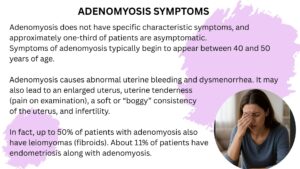
when endometrial tissue grows outside the uterus on areas such as the peritoneum, uterosacral ligaments, bladder, or outer surface of the uterus. These implants behave just like the normal lining inside the uterus.
During every menstrual cycle, they thicken and bleed in response to hormonal changes. But since this blood cannot exit the body, it causes inflammation (swelling and irritation) in nearby tissues.
Over time, this leads to the formation of scar tissue and adhesions—bands of fibrous tissue that can cause organs to stick together, leading to pain and fertility problems.
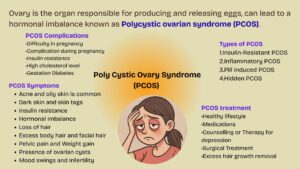
Related article: Polycystic Ovary Syndrome (PCOS): A Complete Guide for Women
How Common is Endometriosis?
Endometriosis affects about 10–15% of women during their reproductive years.
It is found in nearly 70% of women who experience chronic pelvic pain.
The diagnosis of endometriosis is unfortunately frequently delayed for many of these women, leading to needless pain and a lower quality of life.
The average delay for patients between the ages of 18 and 45 is 7 years.
Majority of endometriosis patients say that their symptoms began in their adolescents, early detection, diagnosis, and treatment can reduce pain, stop the disease’s progression, and maintain fertility.
Diagnosis and treatment are expensive, especially for younger patients, making it hard for them to get timely medical care.
Types of Endometriosis
To diagnose and treat endometriosis, it is essential to understand the condition.
Based on the areas of the abdomen and pelvis that are impacted, endometriosis is classified into four categories.
1. Superficial Peritoneal Endometriosis
In this type of endometriosis, endometrial tissue attached to peritoneum which lines the abdomen and pelvis.
Along with abdomen and pelvis, endometrial tissue also attached to other organs within cavities.
This is less severe as compared to another endometriosis types.
2. Endometriomas
Endometriomas, commonly referred to as chocolate cysts, are primarily located in the ovaries.
Chocolate cysts are dark, fluid-filled cysts that can vary in size and are seen in the ovaries as well as various abdominal and pelvic regions.
Chocolate cysts range in size from a few mm to several cm.
Cysts known as endometriomas develop on the ovaries in patients with ovarian endometriosis.
Ovarian cysts can cause the ovaries to function not properly, which can result in significant pelvic pain and infertility issues.
Note- Unfortunately, because the endometrioma cyst and the ovary can occasionally become attached to one another, surgical removal is challenging.
3. Deeply Infiltrating Endometriosis (DIE)
One to five percent of women have deeply infiltrating endometriosis, which is rare.
Endometrial tissue spread to other organs in Deeply infiltrating endometriosis.
It could be outside the pelvic cavity or inside.
DIE penetrate greater than 5 mm in depth.
The organs where endometrial tissue invades are the rectum, bladder, and colon.
In DIE, scar tissue attaches to organs and gets stuck as a result of endometrial invasion. This is referred to as frozen pelvis.
It is extremely difficult to remove the lesions since they create scars on other organs.
4. Abdominal wall endometriosis
Endometrial tissue may occasionally proliferate on the abdominal wall.
A surgical incision, such as one from a C-section, may be where the cells adhere.
Endometriosis Stages
Based on the number of lesions and depth of infiltration, the ASRM classification system is separated into four stages or grades: minimum (Stage I), mild (Stage II), moderate (Stage III), and severe (Stage IV).
In an effort to measure endometriotic lesions, the classification additionally uses a point system.
Points are assigned by doctors based on the depth, and areas of the body affected by endometrial tissue.
The condition can be mathematically scaled using this point system.
- Minimal is indicated by 1-5 points
- mild is indicated by a score of 15 or lower
- Moderate or severe disease may be indicated by a score of 16 or above
Stage I or minimal (1-5 points)
A few tiny lesions, wounds, or implants are present.
They could be on the organs or the tissue that lines the abdomen or pelvic. Scar tissue is little or absent.
Stage II or mild (6-15 points)
There are more implants at this level.
Certain scar tissue may be noticeable since they are deeper within the tissue.
Stage III or moderate (16-40 points)
There are a significant number of deep implants at this stage.
Patients can have small cysts on one or both ovaries and thick bands of scar tissue called adhesions.
Adhesions are heavy bands of scary tissue.
Stage IV or severe (above 40 points)
The most widespread is this.
Patient have thick, dense adhesions and multiple deep implants.
Large cysts on one or both ovaries are also present.
Endometriosis Causes
The precise cause of endometriosis is unknown to medical professionals.
Retrograde menstruation
According to some specialists, endometrial cells found in menstrual blood may return through the fallopian tubes and enter the pelvic cavity, where they adhere to your organs. It’s known as retrograde menstruation.
Family history
Your genes may also be involved. You have a higher chance of developing endometriosis if your mother or sibling does.
It tends to worsen from generation to generation, according to research.
Immune system abnormalities are also present in some endometriosis patients.
However, medical professionals are unsure if a connection exists.Other reasons may include:
Hormone or immune factor
1. Peritoneal cells transformation: Experts think that hormones or immune factors promote the transformation of peritoneal cells into endometrial-like cells.
2. Embryonic cell transformation: Hormones such as estrogen may transform embryonic cells into endometrial-like cell implants during puberty.
3. Endometrial cells implant on surgical site: After surgeries such as a hysterectomy or C-section, endometrial cells can sometimes implant on the surgical incision site
4. Endometrial cell transport: Endometrial cells may spread to other parts of the body through blood vessels or the lymphatic system.
Endometriosis Risk Factors
Risk factor for endometriosis is:
- Family history
- Short menstrual cycles (a gap of less than 28 days between the start of one period and the next) and heavy period (last more than a week)
- First period at a very young age
- Menopause at an older age
- Have never given birth
- High estrogen levels
- Blood is unable to flow normal during period
Endometriosis Signs and Symptoms
During period, if person experience the following symptoms:
- Severe pelvic pain
- Heavy periods
- Pain in pelvic area (lower tummy and back )
- Pain when you poo or pee
- Pain during or after sex
- Tiredness (fatigue)
- Pain or bleeding in other areas
- Anxiety
- Infertility
Endometriosis is most often diagnosed in women and girls from the onset of menstruation (puberty) through menopause, and it can affect anyone who menstruates.
How Endometriosis Affects Fertility
Endometriosis is the leading cause of infertility. It can make it harder to conceive in several ways:
1. Anatomical changes
Scar tissue (adhesions) and cysts can distort the ovaries, fallopian tubes, or uterus, making it difficult for the egg and sperm to meet.
2. Blocked fallopian tubes
Implants or adhesions may block the tubes, preventing the egg from traveling.
3. Poor egg quality
Inflammation from endometriosis can damage ovarian tissue and affect egg development.
4. Altered environment
The pelvic cavity may have higher levels of inflammatory chemicals, which can interfere with fertilization and embryo implantation.
5. Hormonal effects
Endometriosis may disrupt normal hormonal balance, affecting ovulation and the uterine lining.
Endometriosis doesn’t always cause infertility, but it can reduce the chances of natural conception by affecting the reproductive organs and their function.
Diagnosis: How Doctors Detect Endometriosis
Preliminary diagnosis of endometriosis is usually done on the basis of clinical history since most women show normal results of physical examination.
1. Medical history & symptoms
Asking about pelvic pain, painful periods, infertility, or family history.
Differential diagnosis is important because pelvic pain can also be a sign of other conditions as adenomyosis, pelvic adhesions, and gastrointestinal or urologic illnesses.
2. Pelvic examination
Feeling for tenderness, enlarged ovaries, nodules, or pelvic masses.
Ultrasound scans of the pelvis are used to help diagnose ovarian cysts, fibroids, and endometriomas.
Transvaginal ultrasonography is used to identify ovarian endometriotic cysts and improve visualization of the uterus and endometrium.
However, it does not exclude deep infiltrating endometriosis, endometriosis-associated adhesions, or peritoneal endometriosis.
Magnetic resonance imaging (MRI), Computed tomography scan (CT-scan) and Biopsy is used for characterization of the pelvic masses.
Endometriotic lesions can be seen directly using a laparoscope during laparoscopy.
During a laparoscopy, endometriotic lesions can be directly observed with a laparoscope.
Treatments for endometriosis
Currently there no treatments that can cure endometriosis, but there is some treatment available that can help manage symptoms such as pain.
1. Medicines
Painkillers and treatment by altering hormone is given to patients. This is the first way to treat endometriosis.
2. Surgery
If medicines is not working or the patient have substantial amount of lesion or implants. Medical professional advice surgery.
In surgery
• Remove endometriosis-related areas or fluid-filled sacs (ovarian cysts);
• Remove your ovaries (oophorectomy) or uterus (hysterectomy);
• Remove a portion of infected organs that attached with peritoneal cavity and causing problem such bladder, colon.
Lifestyle and Home Remedies for Symptoms Relief
Although there isn’t a cure for endometriosis, there are treatments and natural solutions that can help with the pain and discomfort.
1. Heat treatment
Applying a hot water bottle or heating pad to the lower abdomen can help relax pelvic muscles and reduce pain.
2. Healthy diet
Increase the amount of fruits, vegetables and whole grain in your diet.
Foods rich in omega-3 fatty acids, such as salmon and other fatty fish, may help reduce pain.
Avoid consumption of red meat, heavily processed food such as dairy, gluten, and sugars etc.
Avoid food that cause inflammation.
Consume gluten-free diet such wheat, rye, or barley, rice, corn, quinoa, millet, buckwheat, oats (gluten-free labeled). It improves the health of patient suffering from endometriosis.
3. Herbal supplements
Turmeric help in reduction of anti-inflammatation and provide pain relief but it not permanent solution.
Turmeric capsules are available in the market and can be used, but only under a doctor’s guidance or prescription.
Warm turmeric water or turmeric tea can help in endometriosis related pain.
Cannabidiol (CBD) oil, derived from the cannabis plant, may help relieve pain associated with endometriosis.
CBD oil source- creams, ointments, and oral supplements.
Check local regulations before making a purchase, though, as legality differs by state.
4. Exercise and Yoga
Light exercise, yoga and physical activity release endorphins, which can reduce pain and inflammation, boost energy, and improve overall mood.
Bromelain– Pineapples contain an enzyme called bromelain, which is also available as a supplement.
According to certain studies, bromelain considerably decreased endometriosis-related pelvic pain when combined with the antioxidant alpha lipoic acid and the supplement N-acetyl cysteine.
Myths vs. Facts About Endometriosis
It is just a heavy period nothing else.
It is Myth. Sometimes women with endometriosis may think their symptoms are just normal menstrual bleeding. However, the presence of endometrial tissue outside the uterus causes inflammation, severe pain, and can lead to heavy bleeding.
Endometriosis can be prevented.
It is Myth. There is currently no proven method to avoid endometriosis because its cause is not well understood. The risk can be decreased by taking specific actions to help the body produce less estrogen.
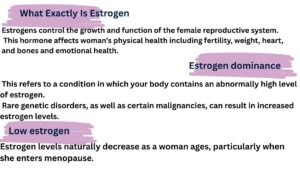
Estrogen can exacerbate symptoms and promote the development of endometriosis. By using a reduced-estrogen birth control technique, exercising frequently, and decreasing weight if you are overweight, you can lower your estrogen levels.
Endometriosis always improves after menopause.
It is Myth. Even though endometriosis symptoms are most common during menstruation, some people continue to experience them long after their monthly periods are over. The ovaries continue to produce trace amounts of estrogen even after a woman has gone through menopause. The hormone may continue to cause pain from endometriosis growths. Therefore, although many women see an improvement in their endometriosis symptoms, not all people have relief from menopause.
Young girls cannot have endometriosis.
It is Myth. Endometriosis can affect girls as early as seven years old. However, it might be particularly difficult to diagnose the condition in young women and teenagers. Many can be treated presumptively, and the sooner this disease is suspected clinically, the easier it is to manage and avoid its later effects.
Endometriosis can affects different organs.
It is Fact. It is also possible for endometriosis to develop outside of the reproductive system. The ureter, bladder, kidneys, intestine, diaphragm, appendix, pancreas, and even the lungs are some more places where endometriosis lesions can progress.
If you have endometriosis, you will be infertile.
It is Myth. Although endometriosis is linked to infertility, many people with the condition are able to conceive spontaneously. A woman’s chances of success can be increased by treating her condition early while maintaining organ function.
Association between endometriosis and smoking
It’s unknown if smoking and endometriosis are related. In some, but not all, studies, smoking is linked to a lower incidence of endometriosis, despite the fact that smoking negatively affects many other aspects of health.
It’s interesting to note that while passive smoking exposure during infancy raises the chance of endometriosis, exposure to cigarette smoke during pregnancy is linked to an 80% reduction in risk.
Although the exact process is uncertain, women who smoke are known to have reduced levels of circulating estrogens, which may prevent endometriotic tissue from growing and persisting.
Future Research and Hope for Better Treatments
New research discoveries and technological advancements have led to the discovery of new markers that may be used as endometriosis treatment targets.
Animal models have been used to evaluate immunomodulators in this class, including tumor necrosis factor (TNF)-α inhibitors and interferon alpha 2 (IFN-α 2).
According to a new study, inflammation causes endometriosis by enhancing signaling pathway components including mitogen-activated protein kinase (MAPK), which may be a target for endometriosis treatment.
In order to improve early diagnosis and treatment outcomes for endometriosis, a combination of innovative therapeutic targets and distinct and specific diagnostic biomarkers will be necessary.
Reas article:
Healthy Weight Loss Made Simple: Science-Backed Diet & Exercise
Recommended Products
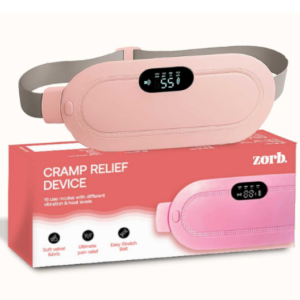
Zorb Period Cramp Relief Device for Women – Period Pain Relief Massager
Tackle menstrual pain with the period pain relief device, combining heat and vibration for fast relief. More effective than a hot pad or heat pack, it’s one of the best periods pain relief products for women who suffer from intense cramps.