

What is Moringa?
Moringa oleifera, commonly known as the drumstick tree, horseradish tree, or simply Moringa, is native to parts of Africa and Asia.
It is referred as the “tree of life” or “miracle tree,” is renowned for its wide range of therapeutic and non-therapeutic uses. Traditionally, it has been used to treat inflammation, cancer, liver and heart diseases, ulcers, wounds, and pain.
Related Article:
Ginseng: Health Benefits, Risks, and How to Take It Safely
Distribution
Moringa is found all over the world, its native regions are India, Arabia, and the East Indies. It is widespread in the Caribbean, Latin America, the Pacific Islands, Africa, Asia, Florida, Madagascar, Central America, Cuba, the Philippines, Ethiopia, and Nigeria.
The medicinal properties of Moringa are attributed to its rich content of bioactive compounds such as alkaloids, phenolic acids, glycosides, sterols, glucosinolates, flavonoids, terpenes, and fatty acids.
Furthermore, it is abundant in essential nutrients like vitamins, minerals, and carotenoids, which enhance its health benefits and contribute to its growing popularity as a superfood.
The leaves, seeds, pods, flowers, and even the roots of the Moringa tree can all be utilized medicinally. It has been an important part of folk, Ayurvedic, and Unani medicinal systems for generations.

Figure1: Benefit of Moringa leaves and seeds
Nutritional Benefits
Moringa Leaves
- Moringa leaves are an immediate treatment for inflammatory diseases like bronchitis, headaches, and glandular inflammation.
- The leaves have been useful for patients suffering from insomnia and treating wounds
- It has antimicrobial and antifungal activity.
- The leaves of moringa protect the liver. It helps in hepatitis and relieve joint pain.
- It reduced the cholesterol levels. Flavonoids found in the plant have been reported to reduce ulcer formation through increasing microcirculation and capillary resistance, minimizing cell damage.
- Moringa leaves help improve hemoglobin levels, and when consumed for 14 days, they significantly increase platelet counts.
- Moring leaves has antidiabetic effect by controlling blood glucose levels, protein, sugar, and hemoglobin .
- The plant helped reduce body weight, which in turn significantly improved the lipid profile.
Additionally, it enhanced glucose tolerance, regulated genes associated with adipogenesis, and lowered the levels of vaspin, leptin, and resistin.
Moringa Seeds
- Moringa seeds have laxative properties and are used to treat bladder issues, prostate issues, and tumors. The seeds have the potential to treat arthritis by lowering inflammation and changing oxidative stress.
- Seeds have antimicrobial and antifungal activity.
- The extract from Moringa seeds, myricetin, has been shown to be a more effective antioxidant. It helps in wound healing, anti-cancer, and anti-ageing etc.
- It have also shown protective effects against liver fibrosis induced by carbon tetrachloride, as evidenced by a reduction in globulin levels and serum aminotransferase activity.
- When taken orally, Moringa seeds provide insulin-like proteins with antigenic epitopes similar to those of insulin, helping to prevent elevated blood glucose (sugar) levels.
Moringa Pod (drumstick)
- Drumstick useful in the treatment of hepatitis and joint pain.
Moringa Flower
- The flowers are used to treat ulcers, enlarged spleen.
- Quercetin in Moringa flowers is believed to be responsible for the hepatoprotective function among the several flavonoids found in Moringa, including kaempferol, isoquercetin, rhamnetin, and others.
Moringa root–
- Moring roots is useful in treatment of toothache, ear pain, helminthiasis, and paralysis.
- The roots are used to treat kidney stones, liver diseases, inflammation, ulcers.
Moringa bark-
- Moringa bark help in treatment of different disorders such as ulcers, toothache, and hypertension. The bark of stem useful for wound healing and skin infection.
Moringa fruit
- Moringa fruit have antimicrobial and antifungal Activity. It inhibits the germination of fungal spores through steroid ring.
- It have anti-cancer properties, several parts of moringa such as fruits, leaves, flowers, stems have been shown to be beneficial against cancer. Moringa contains thiocarbamate and isothiocyanate acts as inhibitors of tumor cells. Moringa also shows cytotoxic activity for brain cancer cells.
- Adding to the list of beneficial effects of Moringa, the various parts of the plant possess fertility and abortion-inducing properties.
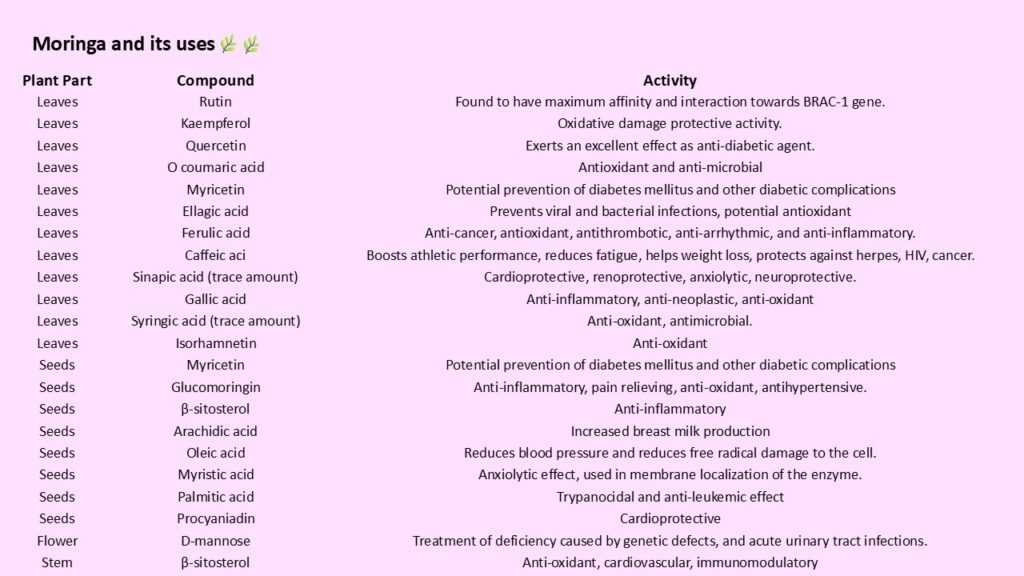
Figure 2: Secondary metabolite present different parts of moringa
Precautions and Side Effects Of Moringa
While Moringa is safe for most people, consider the following:
- Avoid consuming roots or extracts in large amounts (can be toxic in high doses).
- Pregnant women should consult a doctor before use.
- Excess dose of the moringa affect total bilirubin, blood urea nitrogen, and non-protein nitrogen levels and decreased the clotting time.
Note- Start with small amounts to check for digestion issues.
How to Consume Moringa
There are multiple ways to add Moringa to your diet:
Fresh Leaves
- It can be use in soups, dals, stir-fried veggies
- It can be add to green smoothies to get benefit of moringa.
Dried Leaf Powder
- Mix 1 tsp in water, juice, or tea
- Sprinkle on salads or yogurt
- Use in baking (bread, muffins, etc.)
Pods (Drumsticks)
- Common in South Indian recipes (like Sambar)
- Boiled and eaten with curries
Moringa Tea
- Brew dried leaves or powder with hot water and a touch of honey
Capsules or Tablets
- Available in health stores for those who prefer supplements
Final Thoughts: Add a Miracle to Your Daily Routine
Moringa is a natural powerhouse of nutrients and healing compounds. Whether you’re fighting fatigue, managing diabetes, or just want to boost your immunity – this miracle tree can be your everyday herbal ally.
By including Moringa in your meals or morning tea, you take a step toward natural healing and long-term wellness.
Related Article
Chamomile Benefits: A Complete Guide for Health, Skin, and Wellness