

What is Anaemia
Anaemia is a condition in which a person has an abnormally low level of red blood cells or hemoglobin.
According to clinical definitions, anaemia is diagnosed when hemoglobin levels fall below 130 g/L in men, 120 g/L in non-pregnant women, and 110 g/L in children aged 6–59 months.
This condition reduces the oxygen-carrying capacity of the blood, which affects daily activities, physical performance, and overall body functions.
Globally, anaemia is a significant public health problem. Around 500 million women (aged 15–49 years) and 269 million children under 5 years are affected. In India, the situation is particularly alarming, with 59.1% of adolescent girls suffering from anaemia.
The high prevalence of anaemia is a major concern not only in developing countries but also in certain developed nations, highlighting the urgent need for awareness, prevention, and effective management strategies.
Related Article: Anaemia in Adults: Causes, Symptoms, Types & How to Treat
Anaemia is a disease
No, anaemia is a health condition when body contain very low haemoglobin or body doesn’t have enough red blood cells (RBCs).
Haemoglobin is protein in RBCs that carry oxygen from lungs to different body organs. It doesn’t always cause symptoms, but it can.
As a result of anaemia, your organs may not function properly. The condition can be mild and reversible, while other cases can be serious based on the type of anaemia.
What happened if body have low RBCs or haemoglobin?
Haemoglobin transports oxygen molecules, which are then sent to various body organs and contribute to overall health.
When haemoglobin or red blood cells are low, the body’s many organs and tissues do not receive enough oxygen, causing fatigue, weakness, and dyspnea.
Your body may not get enough oxygen to tissues or organs if your haemoglobin levels are low. It causes serious health problems and impacts various organs, including the kidney, brain, heart, and tissues.
What is the relationship between iron and haemoglobin?
Hemoglobin is a protein found in red blood cells that carries oxygen from the lungs to tissues and returns carbon dioxide back to the lungs.
Iron is an essential nutrient and a component of the haemoprotein haemoglobin in red blood cells and of myoglobin, which, respectively, transport oxygen around the body and store it in muscles and other tissues.
Iron help in brain development and low level of iron affect the development of brain.
How anaemia impact the body?
In adult, anaemia affect the work efficiency whereas in children, it leads to impaired cognitive and motor development.
Infant have severe effect of anamia, it starts before the birth. If Pregnant mother is anaemic, it can cause perinatal loss, premature babies and low birth weight babies.
What Are the Different Types of Anemia?
There are over 400 different forms of anemia, and they can be brought on by anything from blood loss to abnormalities in the way your cells function.
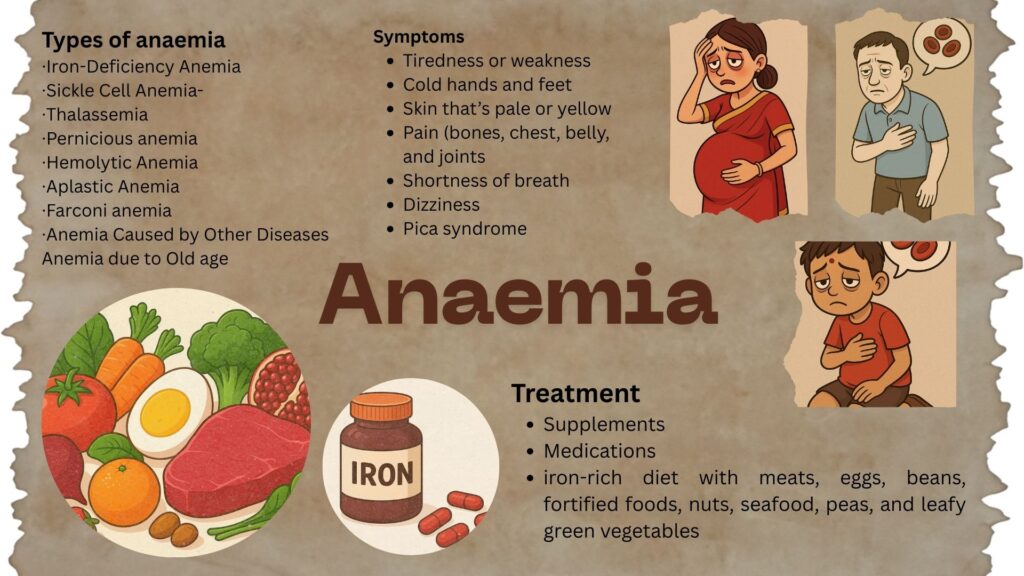
Types of anaemia
Iron-Deficiency Anaemia
Iron deficiency anaemia is the most common type of anemia and generally comes through a poor diet, poor iron absorption, frequent blood loss, and pregnancy.
Sickle Cell Anaemia
Sickle cell anaemia is a genetic blood disorder in which a person produces abnormally shaped red blood cells (RBCs). Instead of the normal round, biconcave disc shape, the RBCs take on a sickle or “C” shape. Because of this abnormal shape, sickle cells are less flexible and often get stuck in small blood vessels, causing blockages that disrupt normal blood flow. This leads to reduced oxygen delivery to tissues, resulting in pain, organ damage, and anaemia.
Thalassemia
Thalassemia is a blood disorder that runs in families. In this condition, the body makes fewer healthy red blood cells and less hemoglobin, which causes anaemia.
Pernicious anaemia
Pernicious anaemia is an autoimmune disorder in which the body cannot absorb enough vitamin B12, leading to reduced production of healthy red blood cells.
Haemolytic Anaemia
Haemolytic anaemia is a disorder in which red blood cells are destroyed and removed from the bloodstream earlier than their normal lifespan, leading to a shortage of healthy red blood cells.
Aplastic Anaemia
Aplastic anaemia is a rare bone marrow disorder in which the bone marrow fails to produce enough new blood cells — such as red blood cells, white blood cells, and platelets.
Farconi anemia
Fanconi anaemia (FA) is a rare inherited blood disorder in which the bone marrow cannot make enough blood cells.
What are the factors responsible for anaemia?
There are also several non-iron-related causes of anaemia, such as a deficiency of vitamin B12 or blood loss from the digestive tract (for example, due to worm infestation). These possibilities make differential diagnosis very important to identify the exact cause of anaemia.
Many Indians are at risk for anemia due to a poor diet, infections, chronic illnesses, digestive issues, and other ailments.
This disease is particularly likely to affect women who are pregnant or bleeding, as well as those who have long-term health issues. As people age, their risk of developing anemia rises.
Following chronic conditions could be responsible for anaemic conditions:
- Rheumatoid arthritis or other autoimmune disease
- Kidney disease
- Cancer
- Liver disease
- Thyroid disease
- Inflammatory bowel disease
Symptoms
Anaemia symptoms can appear so invisible that you might not take notice of them at all. When your blood cells start to drop, symptoms usually start to appear.
The symptoms could include the following, depending on the cause of the anemia:
- Dizziness, lightheadedness, or feeling like you are about to pass out
- A fast or unusual heartbeat
- A headache
- Pain, including in your bones, chest, belly, and joints
- Problems with growth, for children and teens
- Shortness of breath while at rest or with little activity
- Skin that’s pale or yellow
- Cold hands and feet
- Tiredness or weakness
- Brittle nails, Mouth ulcers
- Pica syndrome, or the desire to eat nonfood things such as ice, rice, soil etc.
- An inflamed or sore tongue
What is the diagnosis for anaemia
Complete blood count test
Complete blood count (CBC) test used to measure RBCs, haemoglobin, and other components of blood.
Blood smear test
It count white blood cells, shape of RBCs, and unusual cells
Hematocrit test
It measures the percentage of RBCs in your blood
Reticulocyte count
Used to check for immature red blood cells
What is the treatment Options for anaemia?
Supplements
To get rid of anaemia person should take an iron, folic acid, or vitamin B12 supplement.
Blood transfusion and surgery
Blood transfusion replace red blood cells or stem cell (bone marrow) transplant to replace unhealthy blood stem cells. Surgery can be used to treat internal bleeding that causes anemia.
Healthy diet
An iron-rich diet with meats, eggs, beans, fortified foods, nuts, seafood, peas, and leafy green vegetables may boost iron levels.
Read articles: