

Breast Cancer
When cells in the breast grow out of control and develop into a lump or tumor, breast cancer begins. These cancer cells have the ability to penetrate neighboring tissues and perhaps spread to other organ regions.
Related Article:
Breast Cancer: How to Recognize Early Signs & Get Treatment
Types of Breast Cancer
- Non-Invasive Breast Cancer
- Invasive Breast Cancer
In this section I will include only Non-invasive breast cancer.
Non-Invasive Breast Cancers
Non-invasive breast cancer is an early-stage cancer that does not spread outside the breast tissue. The good news is that it is highly treatable when detected early; however, if left undetected or untreated, it may progress and spread to the surrounding breast tissue.
Stage 0 breast cancer and non-invasive breast cancer is same?
Yes, stage 0 breast cancer and non-invasive breast cancer are the same. It is also known as carcinoma in situ, in which abnormal cells are found in the lining of the breast milk ducts.
It is called non-invasive because the cancer cells have not spread beyond their original location or into surrounding breast tissue.
The survival rate for patients with stage 0 or non-invasive breast cancer is approximately 99%. Therefore, it is important to discuss the condition and possible treatment options with a healthcare provider.
Types of Stage 0 breast cancer
There are two main types of carcinoma in-situ of the breast:
- Ductal carcinoma in situ (DCIS)
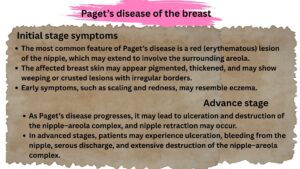
- Paget disease of the nipple
It is important to note that lobular carcinoma in situ (LCIS) is not considered breast cancer, despite the term ‘carcinoma in situ.’ Instead, LCIS is regarded as a marker of increased risk for developing invasive breast cancer in the future.
Non-Invasive Breast Cancers
Carcinoma in situ’ is the term used to describe stage 0 cancers. ‘Carcinoma’ refers to cancer that begins in epithelial cells, and ‘in situ’ means ‘in its original place.’ Therefore, stage 0 breast cancer is defined as cancer that has not spread beyond its original site and remain in particular location of breast tissue.
Non-Invasive Breast Cancers are of two types-
- Ductal carcinoma in situ (DCIS)
- Lobular carcinoma in situ (LCIS)
Ductal carcinoma in situ (DCIS)
DCIS is an early form of breast cancer.
Breast are made up of milk-producing glands called lobules, and tubes that carry milk called ducts. These are surrounded by fatty tissue and connective tissue that determine its size and shape.
DCIS develops when cells lining the breast ducts become abnormal. These abnormal cells are confined to the ducts and have not spread to surrounding breast tissue.
Over time, the likelihood increases that the tumor may penetrate the ductal walls and spread into the surrounding breast tissue and fat.
DCIS Symptoms-
Most people with DCIS do not experience any symptoms. It is often detected during routine screening mammography.
When symptoms do occur, they may include a breast lump, nipple discharge, changes in breast size or color, and thickening, puckering, or dimpling of the breast skin.
Lobular carcinoma in situ (LCIS)
Technically, LCIS is considered a change in the breast rather than a true cancer. The breast contains thousands of small lobules that produce milk, and in LCIS, abnormal (cancer-like) cells grow within these lobules.
LCIS typically remains confined to the lobules and does not spread. However, having LCIS increases the risk of developing invasive breast cancer in the future, so it is recommended to go for regular monitoring to detect any changes early.
Symptoms of Non-invasive Breast Cancer (DCIS & LCIS)
DCIS symptoms- Possible symptoms (less common)
- Breast lump that are very small
- Nipple discharge
- Change in breast shape or size (uncommon)
- Nipple inversion
- Mild breast pain or discomfort (rare)
LCIS symptoms
- No symptoms
- Not usually visible on mammogram
- Often found incidentally during biopsy for another issue
Microcalcifications is an early indication of breast cancer?
Microcalcifications are microscopic calcium deposits in breast tissue that show up as tiny white specks on mammograms.
These deposits are typically benign (such as aging, inflammation, or cysts) but can occasionally be a critical early indicator of breast cancer, particularly when they are clustered or exhibit suspicious shapes (such as fine, linear, or pleomorphic).
Further evaluation, such as magnification views or biopsy, is necessary to determine whether these deposits are benign or cancerous (such as Ductal Carcinoma In Situ or invasive).
Non-invasive cancer diagnosis
Mammogram
The most effective method for identifying breast cancer in its early stages is frequently a mammography, or low-dose breast x-ray. Even before symptoms appear, mammograms can detect breast cancer or other problems.
Breast ultrasound
Doctors may also suggest a breast ultrasound, which uses sound waves to see into the breasts, following an initial mammography. A sonogram, an image produced by the ultrasound, can be used to assess the size and position of a lump and identify if it is breast cancer or a cyst, which is usually not cancerous.
DCIS Grades
If abnormal cells are detected on a mammogram, your doctor may recommend a follow-up needle biopsy. This procedure removes a small sample of cells from the area of concern for further testing to determine whether the abnormal cells are malignant.
DCIS, or stage 0 breast cancer, is classified into three grades—sometimes referred to as nuclear grades—which help guide treatment decisions. In general, the lower the grade, the less aggressive the cancer.
Grade 1 (low grade): Cancer cells look similar to normal breast cells and tend to grow slowly.
Grade 2 (intermediate grade): Cancer cells still resemble normal breast cells but grow faster than grade 1 cells.
Grade 3 (high grade): Cancer cells look very different from normal breast cells and grow faster than grade 2 cells. This grade is associated with a higher risk of spreading into surrounding breast tissue if left untreated.
Read Article: