

WHAT IS GOUT?
Gout is a type of arthritis that causes sudden attacks of severe pain, swelling, and redness in the joints or soft tissues.
Gout develops when excess uric acid accumulates in the bloodstream.
This uric acid crystal deposited in the joints, leading to inflammation, intense pain, swelling, and redness.
Related article- Gout: Causes, Symptoms, Pseudogout and Risk Factors
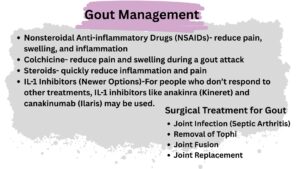
GOUT MANAGEMENT
1. Nonsteroidal Anti-inflammatory Drugs (NSAIDs)
These are the first choice for treating a gout attack. Common NSAIDs include ibuprofen, diclofenac, and indomethacin. They help reduce pain, swelling, and inflammation.
2. Colchicine
Used when a person cannot take NSAIDs. It helps lessen pain and swelling during a gout attack. However, it can cause side effects like diarrhoea or stomach upset.
3. Steroids
If NSAIDs or colchicine cannot be used, doctors may prescribe corticosteroids such as prednisone (oral) or injections directly into the joint. These drugs quickly reduce inflammation and pain.
4. IL-1 Inhibitors (Newer Options)
For people who don’t respond to other treatments, IL-1 inhibitors like anakinra (Kineret) and canakinumab (Ilaris) may be used. This target inflammation caused by gout.
For Pseudogout (CPPD)
There are no medicines to dissolve CPPD crystals. However, NSAIDs and corticosteroids can help relieve pain and inflammation during an attack.
Surgical Treatment for Gout
Sometimes, surgery may be needed if gout causes serious joint problems or complications.
1. Joint Infection (Septic Arthritis)
During an acute gout attack, a bacterial infection can sometimes occur in the joint. In such cases, urgent surgery is needed to wash out the bacteria. This can be done through an open surgery or an arthroscopic procedure (using a small camera and instruments).
2. Removal of Tophi
Tophi are hard lumps of uric acid that can form around joints, tendons, or under the skin. If they become painful, infected, or break open, they may need to be surgically removed.
3. Joint Fusion
If chronic gout has caused severe joint damage, smaller joints (like in the toes) may be fused together. This helps reduce movement and relieve constant pain.
4. Joint Replacement
When gout leads to end-stage arthritis (severe joint destruction), the damaged joint may be replaced with an artificial one. Knee joint replacement is the most common procedure done for this reason.
NATURAL REMEDIES FOR PREVENTION OF FUTURE GOUT ATTACKS
1. Pain Management for Gout
You can manage gout pain at home by reducing inflammation and taking care of the affected joint.
Home Remedies:
- Cold Treatment: Apply an ice pack or wrap ice in a towel and place it on the swollen joint for about 20 minutes at a time to reduce pain and swelling.
- Elevation: Keep the affected joint raised above heart level as often as possible to help reduce swelling.
- Rest: Avoid moving the joint during an attack to prevent more pain and irritation.
- Weight Management: Maintain a healthy weight to lower the risk of future gout attacks.
- Exercise: Do low-impact exercises like walking, swimming, or cycling to stay active without putting too much stress on the joints.
Foods to Eat for Gout
Certain foods can help lower uric acid levels and reduce inflammation, which may prevent gout attacks.
1. Low-Fat Dairy Products
Eating or drinking low-fat milk, yogurt, and kefir can help reduce uric acid levels.
Dairy contains amino acids that help the body remove uric acid more effectively.
Sources: Low-fat or non-fat milk, plain yogurt, and kefir.
2. Fruits and Vegetables
Eating plenty of fresh fruits and vegetables may help lower the risk of gout flares. Even though some vegetables contain purines, studies show they do not increase gout risk.
Sources: Cherries, berries, citrus fruits, and a variety of vegetables.
Note: If you have kidney disease or need to limit potassium, talk to a dietitian about which fruits and vegetables are safe for you.
3. Vitamin C–Rich Foods
Vitamin C can help lower uric acid levels and support gout management.
Sources: Cherries, oranges, kiwi, strawberries, papaya, pineapple, mango, bell peppers (red and green), broccoli, Brussels sprouts, and kale.
4. Whole Grains
Whole grains are low in purines and help control blood sugar, which is important for people with gout and diabetes.
Studies show that eating at least one serving of whole grains daily can lower the risk of gout.
Sources: Oatmeal, whole-grain bread, brown rice, quinoa, and oat bran.
5. Legumes and Plant-Based Proteins
These foods are rich in fiber, antioxidants, and plant compounds that help reduce inflammation and support kidney health.
Although they contain moderate levels of purines, plant-based proteins do not increase gout risk like red or organ meats do.
Sources: Lentils, black beans, chickpeas, and tofu.
6. Water and Unsweetened Drinks
Staying hydrated helps the kidneys remove excess uric acid, reducing the risk of crystal buildup in the joints.
Drink plenty of water throughout the day.
Unsweetened drinks, decaffeinated herbal teas, and black coffee (in moderation) are also good options for managing gout.
Foods to Avoid If You Have Gout
Some foods can raise uric acid levels or trigger gout attacks. Limiting or avoiding these can help prevent flare-ups.
1. Red Meat and Organ Meats
Beef, pork, lamb, and organ meats like liver, kidneys, and sweetbreads are high in purines.
Eating too much of these foods can increase uric acid and trigger gout attacks.
2. Seafood
Some seafood, such as anchovies, sardines, mackerel, scallops, and shellfish, are high in purines.
These can raise uric acid levels and cause gout flares.
3. Sugary Drinks and Sweets
Drinks like soda, sweetened tea, energy drinks, and sugary juices contain fructose, a sugar that increases uric acid production.
Limit or avoid these to reduce gout risk.
4. Alcohol (Especially Beer)
Beer and other alcoholic drinks can trigger gout attacks.
Alcohol slows down the removal of uric acid and beer contains purines that further raise uric acid levels.
5. Highly Processed Foods
Processed and packaged foods high in salt, sugar, and trans fats can increase inflammation and kidney stress.
While they may not directly cause uric acid buildup, they can worsen gout and other health issues.
Related article:
Rheumatoid Arthritis (RA): Symptoms, Causes & Risk Factors
How Rheumatoid Arthritis Is Treated: Complete Management Plan Explained
Osteoarthritis: Symptoms, Causes & Risk Factors
Osteoarthritis Management: Treatment Options, Exercises, and Medications